Friday, August 31, 2012

Fall Faculty Development Day

Before the semester began, we held our bi-annual Faculty Development Day, which was, for the second August in a row, coordinated with the New Student Convocation. Whether or not you were able to join us, take a moment to enjoy a few pictures from the day's activities.

The MCC Blue Shirt Posse During the Convocation Ceremony

Board Trustee Dennis Adams in the Dunk Tank

Doug Goostree and Bruce Spangenberg

Tim Seitz and Paul Stahmann

These two are ready to start the year. For sure.

Students Enjoying the Convocation Picnic

Some of Our Excellent Faculty Members: Kate Kramer, Julie Freelove, Heather Zaccagnini, Elaine Whalen, Anne Humphrey, Shiela Venkataswamy, Lisa Crizer, and Christine Grela

The Little Gymnasts

Dr. Smith Enjoys Some Sweets

Colleague Connectivity: Amy Ortiz Shows Off  Fashion and Art

The "Re-Birthday Party" for MCC's New Brand

And make sure to save the date for our Spring Faculty Development Day on Thursday, January 10, 2013.

See you around campus!

Monday, August 27, 2012

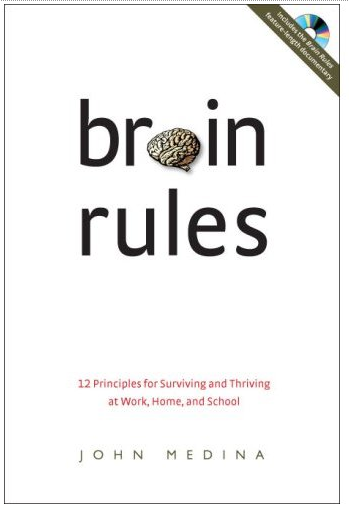
Brain Rules

Over the summer I cultivated my fascination with the human brain by reading a book by John Medina, a developmental molecular biologist and professor in Seattle, Washington. The book, called Brain Rules: 12 Principles for Surviving and Thriving at Work, Home, and School, was not only an interesting and enjoyable read, but Medina also gave me some ideas from his own classroom for presenting lessons.

A big part of Medina's book centers around human memory. He writes that people's attention spans typically start to wane after 10 minutes. Because of this, as well as because of the principle that people tend to remember things to which they are emotionally connected, Medina creates his lessons in 10-minute "modules." At the end of each module he not only repeats the main idea he has just covered (repetition is the key to remembering!), but he will also grab his students' attention with a personal anecdote or emotional bit of information. By doing this he can recapture his students' focus for the next 10 minute module and reinforce what they have just learned.

In addition to talking about memory, Medina expresses frustration with the physical layout of the typical classroom. He believes that tables and desks facing the all-too-familiar podium is not the best structure for student learning. Because he brought it up, I got to thinking about how I would design my ideal classroom. Would it be small four-seat tables scattered around the room with whiteboard on all four walls? Or would it be a horseshoe shape of chairs so students would actually look at one another when addressing discussion questions? I couldn't come to a firm resolution, so I'm curious to hear from you: What would your ideal classroom look like?

If you're interested to know what Medina says about
  • keeping a healthy brain
  • how we remember
  • why multi-tasking is impossible, and
  • the "Jennifer Aniston Neuron" (yep, you read that correctly!)
then check out his book. And if you listen to the audiobook, be aware that Medina narrates it himself and his enthusiasm about the human brain is big and absolutely contagious!


(For a more scientifically minded approach to the human brain and reading, check out Maryanne Wolf's Proust and the Squid: The Story and Science of the Reading Brain.)

Sunday, January 15, 2012

Spring Faculty Workshop Day

We had a smooth day last Thursday for our bi-annual faculty workshop day, regardless of the snow falling outside. And although the snow made it tough traveling for everyone coming to and from campus, it sure was pretty.


The day started with an inspirational welcome from Kate Midday, one of our three 2011 NISOD Award of Excellence winners (other 2011 winners are Don Curfman and Ted Erski), and ended with a smorgasbord of excellent break-out sessions led both by our adjunct and full time faculty as well as one of our administrators. In between we had sessions led by seasoned MCC faculty, brand spanking new MCC faculty, and visiting faculty Jeff Clark from Sommerset Community College in Kentucky; and we hosted our first "Colleague Connectivity" poster session. If you weren't able to make it, we hope to see you at our next faculty workshop day in August (though you don't have to wait until then to check out what great faculty development opportunities are on this semester's calendar--visit InsideMCC and click the "got training?" button at the bottom of the page under Professional Development).

And to all of you, have a great first day of the Spring 2012 semester!

Morning Breakout Session "Veterans in the Classroom"

Don Curfman (far left), Jeff Clark (far right), and two MCC student veterans, Mike and Craig

"Colleague Connectivity" poster session in the MCC Commons

Joe Baumann of Institutional Research and nursing faculty Angela Sass show off their tables

Thursday, November 17, 2011

Citation Enthusiasm, Not Obsession

Submitted by Leslie Dzike, MCC Instructor of English

Most of us who have taught college-age students for any length of time, or who are lucky enough to remember being college-aged ourselves, are well aware of students’ aversion to some things that resemble work.  This is especially true when that work does not appear to make sense or does not appear to have any application (and this is also true for most of us).  Knowing this challenge exists makes Kurt Schick’s article “Citation Obsession? Get Over It,” which suggests that instructors need to rethink our “obsession” with citation, that much more puzzling.
Although I understand that Schick, writing here for the Chronicle of Higher Education, is not advocating for the complete dissolution of any kind of documentation guideline (that would be akin to encouraging academic dishonesty, after all), the notion that those of us who are still nit-picky about citation formats need to “get over it” is problematic on several levels.
To start with, Schick’s assertion that, “More than anything, source attribution enables students—who, by virtue of being students, don't yet know much about a subject—to borrow knowledge and ethos from those who do. It's just about that simple” is a point well taken. However, two paragraphs later he goes on to state that citation format is also “simple.” Presumably any of us who ask students to write try to focus on attribution and ethos, if not necessarily using those terms, in addition to all of the other important facets of writing, such as using evidence to support positions taken and ensuring that the construction of the argument itself is logical. Specific attention and weight to these components, however, does not eliminate the need for correct citations because it is through the citations that we can see “borrowed ethos” demonstrated. Furthermore, if citation format is that simple, why then is it asking too much of our students to follow a particular format? The implication is that thought development is paramount and that format has nothing to do with the conveyance of the overall idea, and therefore is not something that students should pay much attention to. Although good argumentation, support, and thought development are crucial, that fact does not make format of citations any less important. Instead, correct format should be considered one of the facets of a well-written paper.      
Furthermore, I personally resent the charge that instructors who focus on the details of a particular format are sacrificing substance. Is there not room enough for attention to both substance and format? Beyond this obvious question, even those of us that are particular about our documentation style formats usually also only include them as a component of the overall assessment of a research assignment, rather than the primary focus. However, even if they were the primary focus of a specific assignment, maybe that assignment’s intent was only to assess the students’ acuity at following directions, which is a skill in itself, rather than any specific writing skill. After all, if students cannot or will not follow basic instructions, such as assignment details, do they not deserve to fail? If you assign a paper about the Milligram experiments and their ethical questions, and you instead receive a paper about Civil War, even if the paper about the Civil War is the best paper you’ve ever read, and is flawless in its thought development, grammar, and source use, does it not still fail to meet the assignment requirements? All of that notwithstanding, students will also have to learn how to follow directions at some point, and hopefully sooner rather than later. It’s not as though their boss will give them a project with specific guidelines and due dates and all kinds of other administrative tasks and not expect them to be adhered to. Part of what we are teaching our students with the insistence on paying attention to those nit-picky details are that details are important, as is following directions. To paraphrase Schick, asking students to follow a particular documentation format is that simple.
Requiring students to follow a particular citation format does not sacrifice substance, which consequently means that it citation nit-picking is not used as a crutch to eliminate responding to the student writing itself. In addition, the idea that students should not be tasked with learning things that are not part of their vocational plan is contrary to the very purpose of a liberal arts based education. Since most of us are not really debating the merits of general education requirements, we should also not be debating whether or not adherence to a particular citation format is necessary – it is.

Saturday, November 12, 2011

The Winner Is...(finally revealed!)

Last semester we held our first conversation starter to see what ideas you had for ramping up the energy in the classroom--and for some of you that meant taking your students out of the classroom! Whatever works for you, we wanted to share our contributors' great ideas and reveal the winner of the drawing for a gift certificate to the fabulous MCC Cafeteria: Susan S. in IT! Please congratulate Susan, and read on for some great ideas.

"A teacher has to also be an entertainer. An attention-grabber at the beginning of class can wake up the students and get them going; and making the class exercises and discussions relevant to the student is always helpful.

I know an English teacher that works with lower-level students, whose main form of writing up to his class has been texting. So he starts the class by asking them to text -- to a purpose. Such as, 'Write a text that would convince your mom to give you money to go to Florida for spring break'.

Then he says, 'Cut it by 50%, but still keep the meaning.' And then, 'Cut it in half again.' They end up with a short sentence that has to be both convincing and readable.

He says that after a week of these kinds of exercises, students actually ask to be able to write longer pieces, like paragraphs, then a page, and longer yet. He doesn't have to coerce them into writing, he just lets them discover the value of using language and words to convey something relevant to them."
(Contributed by Susan)

"To ensure that students have been listening, reading, and understanding class material, I begin class reviewing the material covered in the previous class. The catch is this: the students lead the review. The student who walks into the class last (usually within 5 minutes into class) gets the honor of starting the review process. The student gets a marker and the whiteboard to enlighten the class on any concept we covered in the previous class. The student is required to explain in her or his own words the concept, and once that is done, must pass the baton/marker to a person of her/his choice. Initially when I started this ritual, students groaned as they were approached. Presently everyone has accepted this practice, and there are even enthusiastic students who raise their hands, wanting to go up front with the marker. As the marker is passed on we put together the material from the previous class. This doesn't take much time, but it serves to quickly review what we did the last class before we move on to the next topic. After all, twenty four hours is a long time to remember "stuff" for some young minds!

(Note: Jim Falco shared the marker technique with me. He said it got students up and moving and kept them on their toes with class material.)"
(Contributed by Shiela V. in Sociology)

"I owe a debt of gratitude to Jim Gould for this suggestion, which I've used nearly every class meeting this semester. Students are instructed to spend the first 5-10 minutes of each class making notes of the "likes," "dislikes," and "confusions" of the text we're approaching that day. I call on students for their input, and we address each question as it comes up, rather than trying to discuss a reading from top to bottom. Usually the key points of a philosophy essay are found deep in the center, so a "pebble" thrown in the middle often makes the discussion ripple to all areas of the text." (Contributed by Lori K. in HSS)

"On April 1, 2011, we had a class extra credit Legal Environment of Business 2 hour trip to the McHenry courthouse. Five students listened to civil, criminal, and law enforcement officials speak the vocabulary words and explain the issues and concepts of many chapters in our textbook. The students clearly enriched their learning by seeing the legal environment and watching the decisions at trial and on appeal resolved live in front of them." (Contributed by Mary A. in Business)

Thanks to everyone who contributed!

Friday, November 11, 2011

Do You Know Boolean Searching?

The wonderful librarians here at MCC are always improving upon their already terrific Information Literacy workshop series for our students. Their workshops are informative and always entertaining, though this semester they've outdone themselves by bringing in a terrific video from a librarian at the Hunter Library, Western Carolina University. If you've ever wanted to know what the heck Boolean searching is, then check it out. And even if you know what the heck it is, watch this five minute video for five minutes of faculty development fun.

Enjoy!

Wednesday, April 27, 2011

MCC Takes on the White City

Submitted by the MCC Sociology Department
Twenty- two of us boarded the MCC mini busses on April 10, 2011 to spend a day looking at Chicago in a different way. We traveled back in time to 1893, the year of the “World Columbian Exposition.” Our interest was to explore the exhibition grounds, the remnants of the White City, and life during this period.
The MCC Sociology Department, along with Kathy Hayhurst, put together a phenomenal expedition to draw a closure for the first book of “The One Book One College” program, Devil in the White City.  This vignette of the late 1800s included a trip to The Hull House museum, The Parthenon restaurant in Greektown, the Midway Plaisance (site of the first Ferris Wheel), Jackson Park to see the replica of “The Republic,” The Museum of Science and Industry (originally The Fine Arts Building), and the Osaka Gardens on the Wooded Island.
Some of the group at the Hull House museum


On the Midway
 
At the Museum of Science and Industry
 
Inside at the Museum of Science and Industry


At Osaka Gardens


At Osaka Gardens


At Osaka Gardens


Eating at the Parthenon


At The Republic statue


The Sociology team with Kathy H.

Monday, April 18, 2011

Identifying Learning: A Discussion Starter

Below are some discussion-leading ideas and questions from contributor Dawn Wagner, Instructor of International Business and Marketing at MCC. Read them over and then reply with your best attention grabber or student motivator. Anyone posting their comments between today and the end of day on Thursday, April 21 will have their entry published and will be entered into a drawing to receive a gift certificate to our very own MCC cafeteria! Either enter your comment below or email it to Laura Power.

"Does every blank stare mean that our students aren't paying attention, or are they really doing what we want: listening, learning, and synthesizing? And what can we tell by the way they text, take notes, talk to the person next to them, and eat Doritos?
How can we teach, model, apply, and reflect every day in both our online as well as in our traditional classrooms? What are you doing that works?"

Wednesday, April 13, 2011

Teaching Professor, April Issue--Online!

Have you checked out the latest issue of The Teaching Professor? April's articles include topics about plagiarism prevention, group work models, and writing lab reports. And that's not all--read this teaser for "Expediting Feedback to Students."

If you never signed up last Fall as part of MCC's group subscription, contact Laura Power for quick and easy instructions, and then enjoy your fill from April's issue or any issue in the online archives.

Monday, April 11, 2011

Texting in the Classroom

By contributor Laurie Riggin, Instructor of Art at MCC

Is frequent text messaging in class harmful to students’ educations? In this digital age of technology, constant information, and multi-tasking, students can engage in constant communication with others but this practice may actually encourage scattered concentration, distraction, and disengagement with course material. Many students have a difficult time withdrawing from technology--the phone becomes more interesting than the real world. Recent studies have shown that constant texting leads to anxiety, distraction in school, falling grades, and sleep deprivation.  As an educator, I worry that students are not developing the social skills they need to succeed in school and beyond the classroom.
I make it clear to students at the beginning of each semester that I have zero tolerance for texting in my classroom. If they are caught using their phone, they will be asked to leave and will receive a “0” for that day’s activities. Students also sign a “promise statement” that they will turn off and refrain from using their phone during scheduled class time. Throughout the semester, I also provide reflective periods as a way to create a level of relaxation, awareness, and concentration. In the spring and fall, I have my students spend quiet time near the pond or in MCC's zen garden. For several minutes, they close their eyes and concentrate on hearing the “smallest” sound: frogs croaking, a distant bird chirping, the wind. This exercise encourages contemplation on the immediate world. It also inspires the imagination, as well as creative and compelling thinking. As a result, students are more focused on course material and they engage with their classmates in a more direct way.