Showing posts with label Students. Show all posts

Wednesday, January 13, 2016

Three Ideas for Breaking the Ice on the First Day of Class (Reposted)

When I first started teaching, I struggled with how to start the first day of class. I used to dive right into the syllabus, but then I realized that my students had a hard time engaging with me when I spent the first thirty minutes of our first-ever class talking about my attendance and plagiarism policies. (snoooooooze)

I still had to cover that important information, but I decided that I'd warm up my audience first so they'd feel more comfortable and engage with the syllabus material (and hopefully read it and ask questions about it), and so I could get a sense of who my students were.

So now, I spend the first thirty minutes of all of my first days of class with some sort of "introduction" activity. Hopefully one of these will work for you!

Ask Students to Draw a Self-portrait
Ask the students to draw a little picture of themselves doing something they love to do. The students don't have to show their portraits to anyone else but you, but when they explain their portraits and their hobbies to the class, it gives everyone a quick introduction, and the personal detail helps you remember each student's name. (make sure to tell them that artistic ability is not important, and make sure to draw your own portrait [mine is always an awful, square-headed stick-woman]).

This is one of the better portraits I received last semester

A student draws himself throwing dice for a table-top role playing game

A common portrait: a student playing a video game

I ask my students to write their names and "majors" on the other side of their portraits and I collect them at the end of our first day. I flip through them after class and then before we meet again, and I can remember all of their names by the first week.

Have Students Interact
Use a Getting to Know You Bingo card like the one below. You can make sure that each item on the card is something that you can sign off on, and see how many students approach you. Once you reveal to them that all spots apply to you, too, they've gotten a glimpse at their instructor as well. The "prizes" can be candy, extra credit points, or a "pass" on the first pop quiz--whatever you want!


Getting to Know You Bingo Card


You could also ask students to form small groups to interview one another. Provide the questions to get them started--questions related to your subject matter, or general first-day questions--or have them come up with something on their own. Once everyone has talked to each other, ask for volunteers to share something interesting they learned about someone in their group.

Groups of three are better than pairs; if you ask students to get into groups of two, you run the risk of having an "odd man out" and a student feeling awkward about not having a partner. If students get into groups of three, there's a bit less pressure.

Use a PollEverywhere Poll
PollEverywhere a free and easy to use service to get students answering low-stakes questions anonymously. You can ask silly questions based on the syllabus (like the sample below), or you can ask them questions about their expectations of the class.


After I covered my syllabus on day one of my class summer, my students typed in questions they still had so we could go through them anonymously. This worked well because they came up with questions about things I don't normally cover (bringing food into the class [I don't have a formal policy for this because I've never had a problem], if they should call me "Mrs./Ms./Professor" or by my first name [I never bring this up on my own because I never really have a clear answer].

Be careful, though, because you might get questions that are not classroom-related (e.g.: how many tattoos do you have? what is your dog's name?). I told my students that I'd answer all of those questions if they came to see me during my office hours. None of them did.


So what works in your classroom?

Wednesday, March 04, 2015

Career Services Has a New Tool


Contributed by Evette Thompson from MCC Career Services:
 
Career Services has a new tool called InterviewStream, which can be utilized in classrooms and/or the comfort of your own home. 

This new tool is available for students, faculty, and staff. The benefits of InterviewStream are the helpful interview tips for posture, how to correctly answer questions, becoming familiar with video interviewing, and the ability to critique yourself afterwards. This useful tool is compatible with phones, tables, and computers as long as there is a webcam attached.


InterviewStream would be an excellent tool if your class is conducting mock interviews or is practicing presentation styles--it would also be great if you want to brush up on your own techniques if you're anticipating an interview for a professional organization, conference presentation, or something else.

Wednesday, January 15, 2014

Dealing with Disruptive Classroom Behavior


Contributed by Talia Koronkiewicz, Manager of Student Conduct & Campus Life

The Professional Development and Student Conduct Offices are excited to host the webinar, Managing Disruptive Classroom Behavior: Strategies for Creating a Safe & Dynamic Learning Environment on both Wednesday, January 22 at 2 p.m. and Thursday, February 27 at 12:00 p.m.

Cartoon by David Sipress

Whether you are a seasoned faculty member or just starting out, classroom management is not easy. This 1.5 hour webinar will provide you with great resources to start the semester off on the right foot!

Webinar Participants Will:
  • Develop an overall philosophy of classroom management that promotes learning and creates a safe environment
  • Implement effective strategies for creating and sustaining an engaging and respectful learning environment
  • Learn strategies for setting the right tone on the first day of class
  • Generate a list of practical strategies for redirecting disruptive behaviors
  • Learn how to handle side conversations, digital distractions, and inappropriate comments
  • Review how to use positive language in a syllabus that sets expectations, policies, and procedures
  • Examine the instructor's role in disruptive student behavior
  • Identify when and how to make referrals for student conduct violations
Register via the Professional Development auto-registration site today!

Monday, June 10, 2013

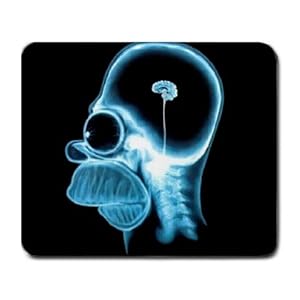
Using Your Brain: Notes from NISOD

Julie Freelove, Jim Falco, and I were able to attend NISOD's 35th Annual International Conference on Teaching & Leadership Excellence (and Juletta Patrick was able to present at the conference! check out her blurb on page 38 of the conference program PDF).


The three of us scoured through thirty-one pages of breakout session listings to find some really terrific sessions, and today's post will give you a few tidbits from two of them.

On Monday, May 27, the first full day of the conference, I attended two back-to-back workshops led by Dr. Janet Zadina, an educational neuroscientist and adjunct associate professor at Tulane University's School of Medicine. I hadn't planned on attending Zadina's second session ("The Multiple Pathways Model: Using Brain Research to Orchestrate Teaching and Learning"), but during her first session ("Tapping Into the Brain's Reward Pathway to Energize Instruction") I quickly recognized that she was a presenter with great content and great style; so I decided to attend her second workshop.

Dr. Zadina and a brain (not her own)
One thing Zadina talked about that hit home was student success in the classroom. There are many reasons students don't succeed in any particular class, but one of the things that we, as instructors, can address specifically is a student's lack of prior knowledge.

Zadina gave tips for addressing this:
  • Give students some background information (a YouTube video clip, a newspaper or magazine article that's slightly below reading level) on course content before they start a new reading or project; this will help them to create a meaningful context for the material and will help them dip their toes into water that may be very cold and very unfamiliar
  • Use visuals whenever you can (we use emoticons and emojis in text messages and casual e-mails to signal meaning [especially sarcasm], so why not use images and pictures with students to help communicate the meaning behind the words and concepts?)
Cookies & photos by Bee In Our Bonnet--maybe a perfect project for a pastries class...?

During the second workshop, which focused on the brain's frontal lobe (a good frontal lobe = a good life!), Zadina gave some great tips for helping students learn those all important "executive" (higher level) brain functions:
  • Teach students the process of doing the tasks by modeling them ahead of time during class
  • Show students how to take good notes (on days one or two of the semester, show them your own notes from a seminar or workshop, and spend a minute talking about your own process)
  • Show students how to study for tests and quizzes (use small groups or in-class study sessions to model good studying)
  • Start with short-term, concrete projects before moving on to long-term higher-learning function projects
  • Require meta-cognition (before an assignment or quiz/exam, ask students to answer questions like How much time do I plan to spend preparing for this assignment/quiz? and What techniques will I use to complete this assignment/study for this quiz? After assignments, students can answer questions like Am I satisfied with my final product? and What will I do differently to prepare for the next assignment/quiz?)
There was so much more great information, but hopefully this will get you started thinking about how to be more aware of students' brains and how we can use our own amazing brains when preparing for class.
Look forward to more notes from NISOD, coming soon!

Friday, April 05, 2013

Getting to Know our Returning Adult Students

On February 20, a few of us were able to participate in a webinar, hosted by the Chicago Area Faculty Development Network (CAFDN), entitled "The Returning Adult Student."

The CAFDN moderators (Tony Labriola from Governor State and Mike Sukowski from Chicago State) were joined by four adult students: Lisa, a student at Chicago State; Robin, an NIU doctoral candidate who is also currently working at Gov. State; and Matthew, a U.S. veteran student at Harper College, studying nursing and working in the Harper tutoring center.

The focus of the webinar panel discussion was What Our Students Want, and we'd like to give you a run-down of some of the excellent questions and answers from the session.

Question: What makes a model instructor?
Answers:
  • A model instructor is personal, cares about learning, is motivated and inspired (Robin). 
  • A model instructor pushes students to learn and helps them to understand, works one-on-one, and breaks down complex material (Lisa).
  • A model instructor writes her own PowerPoints (not the textbook's), answers personal questions, and tailors material--either the whole class or as individual students (Matthew).
Question: Do you think instructors should be role models of teachers for those students also interested in teaching?
Answers:
  • Yes, they should exhibit behaviors and attitudes that students would want to cultivate. Unfortunately, sometimes it's the behavior that students see that they don't want to emulate (Matthew).
  • Yes, I've used teachers as models and was aware of how they taught. I took techniques learned from modeling to take into my own class (Robin).
  • A model instructor is one we learn from and we want to be like. Instructors should be versatile in instruction. I ask questions and watch teaching style and how instructors help others in the class; I watch how they're helping students learn (Lisa).
Question: How do you feel faculty incorporate technology into the learning plan (or do they)?
Answers:
  • Technology is used across the board, but it's not always used well if it's forced on an instructor; it must be embraced by the instructor. If used well, it can be hugely beneficial, but forcing it could harm student outcomes. (Side note: My girlfriend teaches 3rd grade and all the teachers at her school have tablets--our instructors should have them, too [Matthew])!
  • I'd like even more technology (but I have a background in tech.)--things like Google features or blogs to develop material. I always enjoy the activity workshops focused on technology (Robin).
  • A lab connected to class where we can work hand-in-hand with the textbook is helpful. I don't have a tech. background, but anytime technology helped illustrate concepts from book was useful (Lisa).
Question: Are things changing in the classroom (i.e. changing from lecture)?
Answers:
  • Lecture is important and it's not going away, but the interaction and discussion is important (Matthew).
  • I prefer group activities, or small groups before large group discussion. Outside classroom projects are helpful so I can learn from my peers (Robin).
Question: What do you not like?
Answers:
  • We don't like it when instructors lose patience. Don't let students identify that you've lost patience. Some students are at different levels, so work with all of them to the best of your ability. Don't show everyone a shortcut until they all understand the long way. Don't dump students on the tutoring center--you still need to have a professional relationship with those students for the rest of the semester (Lisa).
  • You're responsible for your material. If you know there's a bad example, then get a better one. Don't be as confused as the students. Instructors can be heroes if they have a way to explain complex material in a way that makes people understand. Know your material and be responsible for it (Matthew).
  • If you don't have the answer, admit it and get back to your students after you've checked. Be prepared with evaluation terms, such as rubrics, ahead of time, not the day before the assignment is due (Robin).
Question: How demanding should instructors be?
Answers:
  • The most compelling pressures are those put on you by yourself, not someone else. I will invest more time and more creativity in assignments if I find the assignments themselves creative and challenging (Robin).
  • Be demanding, especially in the lecture environment. Hold students accountable; they'll keep that knowledge available. You have the degrees we want, and that's why we're here, so be demanding of us (Matthew).

Stay tuned to the Professional Development calendar for information about all upcoming webinars and face-to-face workshops--we hope to see you down in A210!

Monday, March 18, 2013

What Can Students Do...

Contributed by Flecia Thomas, Dean of Student Success

The Department of Career Services is planning a series of thirty minute seminars entitled “What Can I Do with a Major In…?” on Thursday, April 18th from 9 a.m. – 2 p.m. and we would love your help!

We would like to invite at least one faculty member per department to be featured as one of two panelists for these seminars. Each seminar would have two faculty speakers who will share their insights for twenty minutes and answer questions for the remaining ten minutes. This will give our students the opportunity to gain insight into careers associated with the majors they are considering. 

 
We hope to showcase a variety of faculty who are working in their chosen majors. During each thirty minute session we would like to have at least two faculty panel members address the following as agenda: 
  • How did you select your major and are you working in a career related to your major? 
  • How much education did you receive in order to attain your current position?
  • What insights can you provide into the job outlook for your major?
  • What information could you provide on other possible careers that one could pursue with your major?

If you are interested in being a featured faculty panelist, please check your e-mail for a message from Laura Power regarding the sign-up process (which is very easy!).

Thank you for your time and have a terrific day!