Showing posts with label Discussion Questions. Show all posts

Thursday, August 29, 2013

Teaching Professionalism

In the past few months I have had two instances where I've had a moment. These have not been "senior" moments, and they weren't really "ah-ha!" moments, either. They've been "teacher" moments: moments when I am out an about and I have a realization about my classroom, my students, my syllabus, or something else that has to do with me as a teacher--and if you're a teacher, too (and you likely are if you're reading this post), then you know exactly what I mean. And both of my realizations--my moments--had to do with professionalism, one of our four tenants of Excellence in Teaching here at MCC.


My first moment was while I was opening a checking account at a bank in Chicago, and the account associate--a young man who couldn't have been more than a few years out of college--spoke to me as though we were frat buddies, even though I'd only just met him, and even though I was a female at least a decade his senior. He told me why he was having a bad day; he compared my credit score to other customers who lived in the surrounding area; and he gave me a run-down of the woman who'd come in before me and what banking issues she was having. I was, as you might imagine, taken aback. What, I asked myself, would this man say about me to his coworkers or customers as soon as I walked out the door?

The second moment was last weekend while I was at a big box electronics store in Crystal Lake, looking at televisions with my husband. The salesperson--a young woman who reminded me very much of our traditional aged college students here at MCC--was terrifically helpful and knowledgeable, answering all of our questions and anticipating our concerns about features, size, quality, and (of course), cost. But then, she brought over her manager to speak with us, and he treated us as though we were offensive, scoffing at our concerns, and treating us like children (stupid children at that). In fact, his lack of professionalism left such a bad taste in our mouths, we walked away without making a purchase and instead got a t.v. elsewhere.


And these two moments almost immediately started me thinking: our students are working at stores like this, and they are trying to get jobs as account associates at large national banks. But am I doing a good enough job teaching them skills to apply to their lives outside of the classroom, including professionalism?

There is much written about teaching and assessing professionalism in the field of medicine, but I could find little written about professionalism in other areas (although see the end of this post for some resources). Of course it's essential in the medical fields--our students will be dealing with patients in serious medical situations, and the need for care, privacy, and discretion is of the utmost importance.

But why do we--not just the "we" here at MCC, but the whole higher education "we"--not give more weight to teaching professionalism in other disciplines? Banking, like nursing or occupational therapy, is also a field that requires care, privacy, and discretion (though certainly in a very different way than medicine). Our money is no one's business but ours and our banker's, and I would certainly hope (though my experience might prove to the contrary) that my banker wasn't talking about my business to other customers.

So, I will now start paying even more attention to professionalism in my classrooms. I will continue to try to be a role model of professional behavior--something we all can and already all do in our classrooms--but I will think beyond that. I'll try to create more real-world writing assignments to help students practice professional written communication. I currently have a project in my creative writing class that requires students to investigate a literary magazine to which they'll eventually submit their own work--but now I'll require that they write an actual cover letter to the editor as a part of their report. They need to understand that it is not just their grade in my class that's at stake.

Here are a handful of resources that you might find interesting or helpful:

Using Wikis to Teach Professionalism
Varga-Atkins, Tünde, Peter Dangerfield, and David Brigden. "Developing Professionalism Through The Use Of Wikis: A Study With First-Year Undergraduate Medical Students." Medical Teacher 32.10 (2010): 824-829. Academic Search Premier. Web. 29 Aug. 2013.

Using Critical Incident Technique (CIT) to Teach Professionalism:
Rademacher, Ruth, Deborah Simpson, and Karen Marcdante. "Critical Incidents As A Technique For Teaching Professionalism." Medical Teacher 32.3 (2010): 244-249. Academic Search Premier. Web. 29 Aug. 2013.

Using A Student Built Town to Teach...a Lot!
Hall, Candace. "LE[Superscript 3]AD Academy Builds Professionalism In Vocational Students." Techniques: Connecting Education And Careers 87.7 (2012): 48-51. ERIC. Web. 29 Aug. 2013.

And here's an interesting article about assessing professionalism in counseling.

What new methods of teaching and modeling professionalism might you use in your classrooms? Use the "Comments" section below to add your ideas!

Thursday, August 22, 2013

Making Groups Work in the Classroom

Last semester I participated in the Undergraduate Research Scholar Program here at the College. The student I worked with was interested in researching the impact of positive teacher-student relationships in the classroom on student success, and one of her information gathering methods was to observe a number of faculty members at MCC.

One technique she noted during her observations was the teaching style each instructor used: lecture, lab, small group work, discussion, or something altogether different. And although she drew a lot of interesting conclusions based on her observations, the one I found most interesting was this:

Students were more interested in group work if there was no grade, or if the grade was low-stakes.

Now, I've always worked under the assumption--based on my own experiences--that students care less when there's nothing "at stake" (i.e. no grade). This has, in particular, caused me to stop grading participation (a sticky wicket to try to grade anyway) and to no longer "grade" attendance, and to use in-class activities instead. But this group grade conclusion was really a revelation!

After talking with my student, Shaz, and Anne Humphrey and Elaine Whalen, I came up with some ideas to make group work work for the classroom:

Use group work as a method of practicing what they'll need to do on their own for an independent assignment
The second paper my English Composition 2 students write is an argumentative problem solving paper. Right after I hand out the assignment and explain the principles of problem solving, I have the students practice problem solving during an in-class activity. By doing this, the students can try out the new concept they've just learned in a low-stakes group activity (currently, it's weighted at 3% of their overall grade). And, if they pay attention during the group work, they can use the exercise as a template for the paper they'll spend the following month writing.

Let students "fire" members of their group
In Elaine Whalen's group research project, students can "fire" a student group member who is not pulling her weight. The group must give the student in question a verbal warning, and then a written warning, and the instructor must know about all of it. The student who has been let go from the group will either get a zero on the project or she can ask another group to take her in and hopefully redeem herself. Elaine has found that students who get "fired" work doubly hard in their adopted group.
You're fired.
Use the drafting process for student accountability
If you're giving a group grade on a project but want to make sure that each student has contributed their fair share and has mastered all of the content--not just a small portion of it--ask each student to submit a "rough" final project with all elements included. This allows you to track their participation, and it allows the full group to then decide which elements from each individual student's work should be included (they vet the pieces to create a stronger "whole" piece).

Assign a student to be the designated a-hole
The book You Are Not So Smart by David McRaney (yes, the title is awful, but it's an interesting book) has a chapter on "Group Think." McRaney writes about this phenomenon. The misconception, McRaney writes, is that "problems are easier to solve when a group of people get together to discuss solutions." But the actuality is that "desire to reach consensus and avoid confrontation hinders progress."


Based on that idea and the rest of McRaney's chapter, we can suggest a few things for successful small group problem solving:
  • Don't tell your students your opinion as their instructor--they will think that, because you're the "boss," this opinion is the only one, the "right" one.
  • Allow students in groups to break into pairs--this will allow dissent to manifest, and that dissent might be very good for the problem solving or discussion at hand. Left in the larger group, however, students might simply wait for consensus to be reached and say nothing about their own contrary ideas.
  • Assign an a-hole to the group--McRaney states, "for any group to work, every team needs at least one asshole, who doesn't give a shit if he or she gets fired, or exiled, or excommunicated." So, make sure that there is that voice of dissent by giving one student in each small group the role of devil's advocate. Not only will this produce some interesting results, but the students will get a kick out of it!
What have you done in class to make group work work for you? Let us know in the comments section below!

Wednesday, June 12, 2013

Graphic Organizers in the Classroom

Contributed by Lisa Crizer, Instructor of English, and written about her English & Sociology Learning Community, "'Til Divorce Do Us Part."

One of the things we struggle with in our learning community is something I think every instructor struggles with during a given semester—ensuring that the students are reading the assigned material.

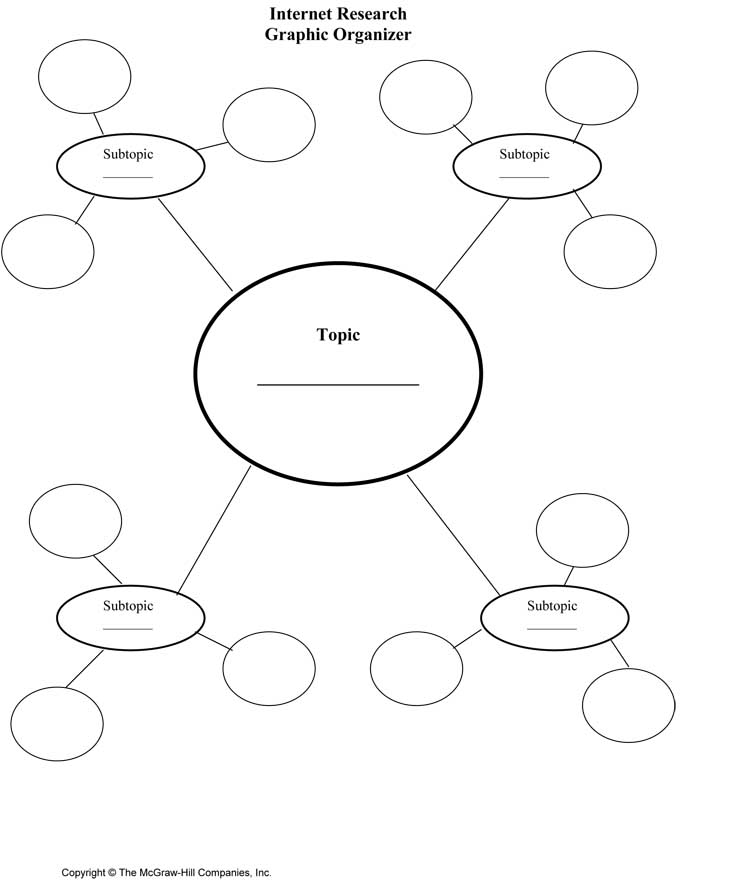
After a few lackluster discussions, Shiela and I decided to try some techniques to encourage students to be a bit more prepared for class and participate more in discussions. One of the activities we incorporated into class was the use of a graphic organizer to help students keep track of what they read and better respond to the material.

The activity asked the students to:
  • Identify the claim—“What is the key argument being made by the author?”
  • List some of the data—“What facts does the author present to support his or her claim?”
  • Interpret the argument—“What is your overall understanding of the author’s argument and what do you think of the piece as a whole?”
We were very pleased with the outcome of this activity. Students were able to formulate their thoughts before class and this was evident in much livelier class discussions. An interesting and unanticipated outcome was that the responses that students gave were pretty varied. Not everyone brought up the same key arguments, and not everyone presented the same data. The variety of responses really added to the class discussion. Overall, this activity was a success and we plan to use it again in our future Learning Community class.

Type "graphic organizers" into Google Images for more results like this one!

Type "graphic organizers" into Google Images for more results like this one!

Type "graphic organizers" into Google Images for more results like this one!

Type "graphic organizers" into Google Images for more results like this one!


 How do you ensure that your students are doing the required reading?
Let us know in the Comments section below!

Friday, March 22, 2013

It's On The Syllabus

As you're on Spring Break, you might use some of your time off (not much--it's your break, after all) to think about your Intersession, Summer, or Fall semester syllabus. To help out, we've come up with some ideas for that very reason.


Keep it Green
If you're trying to cut down on paper waste, don't ask the Duplication Center to print out copies of your syllabus for each student. Instead, create a separate one page document for only the course schedule and due dates. Post both documents--your full syllabus and your schedule only--on the LMS. That way, students can print out only the shorter document if they feel they really need a hard copy of the schedule for the semester. (Idea donated by Paul Stahmann--thanks, Paul!)

And yours might be even shorter than mine!

Keep it Consistent
Does your syllabus have any policies that your rarely (or never) enforce because they're hassles? (e.g. withdrawing students for lack of attendance; writing Student Conduct Reports for cell phone use; accepting late work but then getting thirty late student papers on the last day of class that you have to grade in one afternoon?) Well, consider making it easier on yourself and re-examine those policies.

If you're never really going to withdraw a student who misses four classes, then don't include it in your syllabus; if you're not really going to fill out extra paperwork for that student who occasionally texts in class, then take out that language; and if you really, really don't want to be stuck grading thirty late papers the day before grades are due, then have a deadline for late work or a zero tolerance policy for late work (I'm doing this in my creative writing course this semester--it's a cinch to enforce and amazingly effective in getting students to turn in work).

But as Ellen Zimmerman, Counselor and Coordinator of First Year Experience, says each time she teaches our "Boundaries with Students" workshop for new faculty members, be consistent with whatever your policy is, and make sure you're comfortable enforcing it.

Keep it Clear
Of course everything in your syllabus is clear--all of our syllabus are clear! But sometimes you do something in a classroom that you feel is unnecessary to explain or include in the syllabus, like using technology (specifically, our LMS to enhance your class, or a class blog or wiki).

Students registering for face-to-face courses might be caught off guard with that, as new faculty member Timothy Linnehan (Instructor of Philosophy) found out. One of his returning adult students was thrown off by the technology he used, both in class and as supplements outside of class. Although technology is a necessity and an excellent pedagogical tool, if you have specific technological expectations for your students--or other expectations--it's good to communicate those as soon as possible, and the syllabus is the perfect vehicle!

Keep Them Accountable
Are you sick of students asking questions this late in the semester that they should already know the answers to? (because those answers are on the syllabus?!)

It's that time of year when you wish you owned this t-shirt
Well there are a few methods used by MCC faculty that could at least save you peace of mind, if nothing else. You could pull up the syllabus at the start and end of each class so students get used to using it as a guide to the course.

Or you could give your students a syllabus quiz, either in class the first week or through the LMS as homework. But if you're not crazy about a quiz, you could give your students an interactive Poll Everywhere survey--it's a fun way to check their knowledge (and a way to get them to use their cell phones for good rather than for evil).

Some faculty members also include a "sign here" page of the syllabus that students must sign to confirm that they've read and understood the syllabus. And some faculty members (me) just get used to repeating the phrase "It's on the syllabus." (so that they're even saying it in response to "How are you today, Mrs. Power?")

For more ideas about using the new MCC syllabus template, sign up for one of our "The New MCC Syllabus" workshops in April--log into the Professional Development auto-registration for information.

What part of crafting a syllabus have you honed over the years?
Add your ideas in the "Comments" section below!

Wednesday, February 06, 2013

MOOCs at MCC: A Panel Discussion

On January 29th we had our first "Fifth Tuesday" of the Spring 2013 semester. We were able to sit down for a bit to talk about Massive Open Online Courses (MOOCs) and what they mean to us at MCC.

We were joined by Director of Online Learning and Educational Technology, Ray Lawson; Dean of Library, Kate Harger; and Instructor of English, Anne Humphrey. We barely scratched the surface of the benefits, the concerns, and the implications of MOOCs (you can see the presentation outline at the bottom of this post), and faculty members brought up some excellent questions.

But the questions didn't stop when the panel discussion ended. Instructor of Art and Art Department Chair, Sarah Ruthven, asked Anne and I some follow-up questions via e-mail, and Anne gave her terrific answers (thankfully Anne answered Sarah's e-mail first; I would have just written, "Der...um...Anne?").

Check out Sarah's Q's:
  1. What is driving this? Do MOOCs address a population we are missing? Do they provide a service we can’t already provide through a number of other outlets? Do they address completion? Is there data or examples to suggest that MOOCs help something we are working on at MCC?
  2. If an academic content MOOC is created by MCC faculty members, would it be put through the same process of any other delivery mode including CD&R and Assessment?
  3. This seems to just have popped up overnight. I woke up in fall semester and there they were, like magic--where did they come from?
  4. If I require it and grade it, is it still supplemental?
  5. How is this different from a YouTube Channel or iTunes University?
  6. If it is a marketing tool how do we get an audience for it?
And Anne's Clear and Informative A's:

A short answer is that we are discussing MOOCs because everyone else is discussing them. People are excited about the concept because the current model of higher education is considered to be unsustainable, so any optional methods seem to be worth investigating. People are funding the efforts outside of the classical model, via grants, or via loss-leader type approaches at big and very well-funded universities, or via individual philanthropy – it’s totally outside our current compensation model.

I was glad to hear someone mention CAPC processes yesterday. Yes, I would say a MOOC should go through that process, if it is offered under the auspices of MCC.

MOOCs seem to have popped up overnight because in fact they have only been around a few years. Due to backing from the most prestigious universities in the world and some leading funders and philanthropists, growth has been very, very rapid. Suddenly, the MOOC is the hot topic, and many schools are trying to get into the game.

iTunesU, YouTube, materials in MERLOT and hundreds of other lesson repositories (including Khan Academy), materials for hundreds of thousands of individual teacher and faculty websites, etc. are not MOOCs.

A MOOC is a course, so it has modules, assignments/tests, an overall flow and goals, and interaction. The vast amount of free material online can and should be used to supplement courses, but it isn’t organized as a course, but rather as lessons/handouts, and other artifacts that could be adapted or inserted into a course (observe and licensing or copyright issues noted, though). But a MOOC is a whole course. Now, you can use pieces from a MOOC as individual supplements too, leading to some confusion and overlap in these concepts

Related concepts/methods:
  • Online courses and pedagogy (pretty well developed but not necessarily well employed) (some techniques blended in to traditional classes)
  • Free online content (use in any course to supplement OR for all the content)
  • Development of your own content and hosting publicly for other teachers to use (one of my videos is at 47,233 views this morning)
  • Digital publisher content (usually given in connection with purchase or adoption of the textbook or etextbook)
  • Open online courses (not accredited, some for a fee, offered through several existing platforms)
  • Flipped classroom (for use in a traditional classroom course or blended course, but using online materials)
  • Massive open online course (MOOC) (may grant some certificate on completion, credit being discussed in some cases, primary assessment is peer-to-peer or computer graded, generally free but some may include fees, open enrollment, traditional-ish online course structure)
If you have anything to add to the discussion, please post your comments below, and click through the presentation to the "resources" slide at the end.

Monday, January 07, 2013

Out of the Box…In the Box: Small Plays in the Classroom

Contributed by S.V., Instructor of Sociology
Scene 1: A concerned Chris converses with Erica on phone wondering why his friend Dennis is avoiding him.
Scene 2: Erica confronts Dennis who has taken on cheerleading.
Scene 3: Dennis reveals to Chris his new role as a cheerleader emphasizing its hypermasculine characteristics such as cheerleading being a tough sport and his ability to hang out with the best-looking girls in school.


"Men Who Cheer"
This is a play on "Men Who Cheer" from the Sociology of Deviance class this fall. October 31st was the opening night. Students drew on five readings from the textbook. They documented three to five key actions/dialogues for each scene that explains the process of development/management of deviant identity.  They demonstrated what puts people in the trajectory of deviance and how they rationalize and manage their deviant status, which they must live with. The students were responsible for the script, role assignment, direction, props, and anything else they decided to include.

Students Act Out: the stigma of homeless youth

S.V., introducing the skits

During the discussion after the plays, the class said that they had thoroughly enjoyed this assignment. They were able to understand and retain the material in the reading for their plays compared to other assignments including presentations and class discussions. They were able to put themselves in the shoes of the deviants. The only concern expressed was offending their peers in class who may be living with a particular deviance. Other plays included topics of bisexualilty and anorexia, stigma management strategies of homeless kids, and techniques of neutralization used by car thieves.
Overall this “out of the box” assignment was a very fruitful exercise. Students were also satisfied with the time for preparation which included one entire class period (80 minutes) over a few days. On a personal level, it was a very exciting experience to watch the work of some of the sociologists come to life in my classroom.

How could you use skits to demonstrate key concepts and ideas in your own classroom?

The Sociology of Deviance class, Fall 2012
Visit us again next week for another story about MCC instructors using skits/performance in the classroom!

Thursday, November 01, 2012

Perspective

The other week during Professional Development Day, our keynote speaker, Doug Dvorak, talked about keeping our problems in perspective. He called our issues "high class problems," and while I was a little uncomfortable with the term since I do not, in any way, shape, or form, consider myself to be "high" class (as my predilections for zombies and Kraft Macaroni & Cheese illustrate), I had my own moment of perspective the other day.

I was meeting my students for one-on-one conferences to talk about their essay drafts. One of my student's essays was the story of why he has decided to become a police officer, and one of his reasons was that he and his mother's house had recently been burglarized by their neighbor. I asked him what had been stolen and he said they'd taken $20. I replied, "Well, $20 isn't a huge amount of money, but any kind of a theft feels like a big violation."

And this is what he said: "Actually, twenty dollars is a lot of money for me and my mom. She's not working, so that was a big deal to us."

And I wanted to kick myself.

I live in a two-income household. My husband and I have one car, no children, and not even a pet since our dog passed away last March. I have a good health insurance plan and never have to worry about putting food on my table. And last month I spent about $20 on lip gloss alone (that's not an exaggeration).

So even though I try to understand that our students struggle to pay for not only their tuition but for their textbooks, flash drives, notebooks, folders, and pens as well, it's sometimes hard to see beyond my own relatively comfortable situation.

Our students struggle, sometimes, to pay their rent and their car insurance, their utility and credit card bills, and in the most unfortunate situations they cannot overcome those struggles, and they wind up homeless. According to the U.S. Department of Housing and Urban Development's 2009 Annual Homeless Assessment Report to Congress, 22.3% of all sheltered homeless were between the ages of 18 and 30. Those could be our students. And even if our students don't have to suffer this fate, some of them still live in neighborhoods where they could be robbed by the person living next door.

After having this foot-in-mouth experience, I know that I must be more mindful of what I say, what I think, and how I approach my students and their lives.

Have you ever had a "perspective" moment with a student?

For other reading, see the June 2012 report from the National Center for Homeless Education and the Huffington Post article that decodes some of it.

Tuesday, October 09, 2012

A Short Approach to Writing Across the Curriculum

Contributed by Christine Grela, Instructor of Psychology

As we discuss excellence in teaching, I am reminded of the work I did to help develop the Writing across the Curriculum (WAC) Rubric in 2006. Writing seems to be such an essential skill we want to develop in our students, and it is also an obvious way to assess their ability to comprehend course information and to think critically.
Although some instructors have embraced the WAC idea and rubric, I know there has been concern across campus that perhaps writing doesn’t really have a place in “my” course, or that “this” isn’t the kind of class that writes a lot of papers. So, when I received information about paragraph writing and how it can be integrated across the curriculum by simply evaluating paragraph responses, I got excited.
Perhaps we can truly make writing a form of assessment across the curriculum if we keep it short! Check out what the Center for Teaching and Learning at the University of Texas at Brownsville have done with this paragraph handbook.
What do you think about writing in your discipline? Would paragraphs be appropriate and easy to assess for you?

Thursday, September 27, 2012

One Instructor's Method for Class Participation


Contributed by Craig Derscheid, Instructor of Speech and Journalism/Film

I feel this is a very important part of the classroom environment. I tell my students that this is a way to let me know what they are thinking about and maybe just to ask questions. But what is the right amount of participation?

Sometimes you have students who love to dominate the discussion. I tell my students that after they have made three comments each, they can take a break and let the other students give me their insight through discussion. But what happens sometimes is that you may have complete silence.

At that point, I will call on specific students to get involved in the discussion.

In my film classes, students are not necessarily giving right or wrong answers but using the terms we talk about in class to analyze the film. This is a little easier than if they have to give a right or wrong answer. If I can't get the students to speak up at all, I remind them as I stated at the beginning of the semester I need to have them participate in discussions. If we can't get a good discussion going, I will have them write a one page type written paper about what we should be discussing and give them 10 points for writing an accurate analysis of the film just viewed. This works sometimes but not always to help them to participate.

These are just a few thoughts on getting students to participate in class discussion, which, for my teaching style, is very important. Do you have problems with participation? What are your helpful tips for us to learn from?

Wednesday, September 19, 2012

Teaching with The Mindset List

A couple of weeks ago in A210 we listened in on a free Mediasite webinar about The Mindset List, a "globally reported and utilized guide to the intelligent if unprepared adolescent consciousness."

The Mindset List, which Beloit College has been updating for over a decade, is now a book, and the authors, Tom McBride and Ron Nief, led us through an hour long discussion of putting the list to use in the modern classroom.


There were a number of eye-opening statements from McBride & Nief, including the following:
  • It's not that the students don't know, but that they haven't had the same experiences
  • The students assume that the technology is there and possible, because it always has been!
  • Time magazine published its issue "Welcome to Cyberspace" the year most of our students were born--for them, it has always been a reality
  • Dealing with technology in the classroom and teaching responsible use of technology in higher education is a recursive process
  • Students need to understand that there's a difference between instant information and instant right answers
I got some great ideas for approaching students, and for using new strategies in the classroom. Some of the ideas grew from things I already do--like using design elements in my presentations (photos, media) instead of too much text. But there were a lot of things I plan to try this semester and semesters to come, including:
  • Defining what "being prepared" means in my classroom
  • Flipping my classroom so that I use lecture capture to record lectures for students to watch as homework and use my face-to-face classroom time for "lab" work, which in English usually means drafting, consulting/peer review, and revision time
I also plan to continue to mine current technology and social media trends for things I can apply to my classroom for the students' benefit.

Overall, the webinar was a success, but it made me curious to pick your brains and ask: What do you do to reach your modern students, and what do you think you might start doing differently? 

Saturday, November 12, 2011

The Winner Is...(finally revealed!)

Last semester we held our first conversation starter to see what ideas you had for ramping up the energy in the classroom--and for some of you that meant taking your students out of the classroom! Whatever works for you, we wanted to share our contributors' great ideas and reveal the winner of the drawing for a gift certificate to the fabulous MCC Cafeteria: Susan S. in IT! Please congratulate Susan, and read on for some great ideas.

"A teacher has to also be an entertainer. An attention-grabber at the beginning of class can wake up the students and get them going; and making the class exercises and discussions relevant to the student is always helpful.

I know an English teacher that works with lower-level students, whose main form of writing up to his class has been texting. So he starts the class by asking them to text -- to a purpose. Such as, 'Write a text that would convince your mom to give you money to go to Florida for spring break'.

Then he says, 'Cut it by 50%, but still keep the meaning.' And then, 'Cut it in half again.' They end up with a short sentence that has to be both convincing and readable.

He says that after a week of these kinds of exercises, students actually ask to be able to write longer pieces, like paragraphs, then a page, and longer yet. He doesn't have to coerce them into writing, he just lets them discover the value of using language and words to convey something relevant to them."
(Contributed by Susan)

"To ensure that students have been listening, reading, and understanding class material, I begin class reviewing the material covered in the previous class. The catch is this: the students lead the review. The student who walks into the class last (usually within 5 minutes into class) gets the honor of starting the review process. The student gets a marker and the whiteboard to enlighten the class on any concept we covered in the previous class. The student is required to explain in her or his own words the concept, and once that is done, must pass the baton/marker to a person of her/his choice. Initially when I started this ritual, students groaned as they were approached. Presently everyone has accepted this practice, and there are even enthusiastic students who raise their hands, wanting to go up front with the marker. As the marker is passed on we put together the material from the previous class. This doesn't take much time, but it serves to quickly review what we did the last class before we move on to the next topic. After all, twenty four hours is a long time to remember "stuff" for some young minds!

(Note: Jim Falco shared the marker technique with me. He said it got students up and moving and kept them on their toes with class material.)"
(Contributed by Shiela V. in Sociology)

"I owe a debt of gratitude to Jim Gould for this suggestion, which I've used nearly every class meeting this semester. Students are instructed to spend the first 5-10 minutes of each class making notes of the "likes," "dislikes," and "confusions" of the text we're approaching that day. I call on students for their input, and we address each question as it comes up, rather than trying to discuss a reading from top to bottom. Usually the key points of a philosophy essay are found deep in the center, so a "pebble" thrown in the middle often makes the discussion ripple to all areas of the text." (Contributed by Lori K. in HSS)

"On April 1, 2011, we had a class extra credit Legal Environment of Business 2 hour trip to the McHenry courthouse. Five students listened to civil, criminal, and law enforcement officials speak the vocabulary words and explain the issues and concepts of many chapters in our textbook. The students clearly enriched their learning by seeing the legal environment and watching the decisions at trial and on appeal resolved live in front of them." (Contributed by Mary A. in Business)

Thanks to everyone who contributed!

Monday, April 18, 2011

Identifying Learning: A Discussion Starter

Below are some discussion-leading ideas and questions from contributor Dawn Wagner, Instructor of International Business and Marketing at MCC. Read them over and then reply with your best attention grabber or student motivator. Anyone posting their comments between today and the end of day on Thursday, April 21 will have their entry published and will be entered into a drawing to receive a gift certificate to our very own MCC cafeteria! Either enter your comment below or email it to Laura Power.

"Does every blank stare mean that our students aren't paying attention, or are they really doing what we want: listening, learning, and synthesizing? And what can we tell by the way they text, take notes, talk to the person next to them, and eat Doritos?
How can we teach, model, apply, and reflect every day in both our online as well as in our traditional classrooms? What are you doing that works?"