Yesterday afternoon I got a message from Deborah Firak, one of the hundreds of extraordinary faculty members here at MCC who go above and beyond their students' needs to deliver content in innovative and exciting ways.
Deb, who teaches biology, shared a video with me that she made "for [her] students to memorize the structures of the heart & circulatory system." She wrote a "ditty" to help them remember this important information, and then she put that song to work in this video, which is, for lack of a better word, adorable. Please watch it:
Now that you're bopping your head to those dancing little blood droplets and know a bit about the heart and circulatory system, send me a message to let me know what you have been up to. Because guess what? You're also one of the hundreds of extraordinary faculty members here at MCC, and you go above and beyond your students' needs to deliver content in innovative and exiting ways. So let's hear about it!
Showing posts with label My Classroom. Show all posts
Showing posts with label My Classroom. Show all posts
Thursday, February 06, 2014
Tuesday, June 18, 2013
Multimedia Research Papers
Contributed by Robert McCord, Instructor of English
This last year I decided to try and create multimedia research paper assignments for my students in English 152. I’ve taken some PLS courses in the topic, and I wanted to try them out.
In one class during Fall 2012, the students wrote two traditional and one multimedia paper. For two classes in Spring 2013, all three papers were multimedia. Paper topics included motorcycle helmet laws, the influence of online technology in our lives, food and health in America, and sustainability. I surveyed the classes to assess their reaction to the new types of writing projects, and I've included the results and my conclusions at the end of this post.
First, to define multimedia papers, I chose a model with a standard argumentative research paper at its core, and augmented with several media tools such as a Power Point slideshow, an online animation, or a pamphlet.
I graded the paper with a standard rubric. The media components were graded with separate rubrics. All elements had their own value in points, and each had a separate grade. The idea behind this is for students to work not only on research and writing, but to convey their argument in several different ways. The paper is the standard written and researched argument. The media components allow for visual and audio means of communication.
In addition, students can work with various writing situations. For example, the Power Point slideshow is for a small group presentation, and is accompanied with a narrative script. The student would present the argument in a format to fit small group interaction and visual imagery. The pamphlet has a different audience: a reader who only has two sides of a folded paper to get the main points. An online animation can be used like a Public Service Announcement (PSA) where the audience has only a minute or so to view the video and get the message. Also, we practiced using other media tools as homework assignments.
Here are some of the media tools we used:
So, how did the students react to this? At the end of each semester I surveyed them, and here are the results:
This last year I decided to try and create multimedia research paper assignments for my students in English 152. I’ve taken some PLS courses in the topic, and I wanted to try them out.
In one class during Fall 2012, the students wrote two traditional and one multimedia paper. For two classes in Spring 2013, all three papers were multimedia. Paper topics included motorcycle helmet laws, the influence of online technology in our lives, food and health in America, and sustainability. I surveyed the classes to assess their reaction to the new types of writing projects, and I've included the results and my conclusions at the end of this post.
 |
| istockimage |
I graded the paper with a standard rubric. The media components were graded with separate rubrics. All elements had their own value in points, and each had a separate grade. The idea behind this is for students to work not only on research and writing, but to convey their argument in several different ways. The paper is the standard written and researched argument. The media components allow for visual and audio means of communication.
In addition, students can work with various writing situations. For example, the Power Point slideshow is for a small group presentation, and is accompanied with a narrative script. The student would present the argument in a format to fit small group interaction and visual imagery. The pamphlet has a different audience: a reader who only has two sides of a folded paper to get the main points. An online animation can be used like a Public Service Announcement (PSA) where the audience has only a minute or so to view the video and get the message. Also, we practiced using other media tools as homework assignments.
Here are some of the media tools we used:
- GoAnimate: This is an easy and fun way to make online animations. Students create a free account and can make short videos. They can send the link to the instructor for viewing. We used this and XtraNormal to make PSAs on our topics. Usually the animation was a dialogue between two characters.
- XtraNormal: Another fun, free, and easy online animation tool
- PicMonkey: Free online photo editing, with no account needed. We used this to make collages – purely visual communication. Students can use online photos and cite the sources.
- YouTube: We made playlists based on our paper topics and links can be shared. This allows students to collect informative and useful videos into one page for others to view. We didn’t need to make our own videos, but a free account is required.
- Blogs: I set up blogs for students in Angel. Students posted on their own blogs and responded to others’ postings. It was a fun way to get some online interaction in the classroom. I’m sure the same features are available in Canvas.
- Pamphlets: MS Word has some nice pamphlet templates. For this media students must communicate the basics of their paper on one sheet of paper, printed on both sides. It’s almost like an outline with some graphic elements. We printed them out and folded them.
- Letters: For one project on Illinois motorcycle helmet laws, I had students write to their state representative to express their view on the issue. Sending the letter was optional!

So, how did the students react to this? At the end of each semester I surveyed them, and here are the results:
- Students in two courses in Spring 2013 were asked which they preferred, multimedia or traditional papers. Out of 32 student answers, 23 preferred traditional papers, and 9 preferred multimedia papers. I was surprised at how many liked the old-fashioned research paper! Some expressed that it was easier because it was so familiar. Others thought that the media components just repeated what was in the paper (that was part of the point!). They didn’t get that the communication environment shaped their presentation.
- Students in the Fall 2012 course were asked if they preferred writing all traditional papers, a mix of traditional and multimedia papers, or all multimedia papers; 19 Students answered: 3 wanted only traditional papers, 12 liked a mix, and 4 wanted only multimedia papers. Here students express cautious interest in the new paper form, as long as they get to write standard papers, too.
- Students in the Spring classes were asked about which media components they liked and disliked. Here the data is mixed. Almost every tool had similar numbers of likes and dislikes, except for the Power Point & script, which had only one dislike and 11 likes. It is the most “traditional” of the media components, so students again are expressing a preference for what they already know.
We’re often told that students are bored with the same old
assignments, and that their work should be relevant and exciting, with lots of
online and hi tech elements. I agree
with this! However, my students were
less sure of this idea. Perhaps when it comes
to grades they want the tried and sure assignments they’ve been doing for
years.
Also, I think the idea that shaping
their argument to fit different situations is new to them. Good!
I want to expose them to new methods of communicating. I am pleased with the results so far and will
continue to assign multimedia projects, along with traditional papers. I hope that with Canvas, there may be new ways
to put the elements together in one package that gives it a greater sense of
unity. For example, I could have
students create a portfolio on Canvas for the multimedia paper, so that each
element is represented by a link on the page. This could help students see each element as part of a larger whole.

Wednesday, June 12, 2013
Graphic Organizers in the Classroom
Contributed by Lisa Crizer, Instructor of English, and written about her English & Sociology Learning Community, "'Til Divorce Do Us Part."
One of the things we struggle with in our learning community is something I think every instructor struggles with during a given semester—ensuring that the students are reading the assigned material.
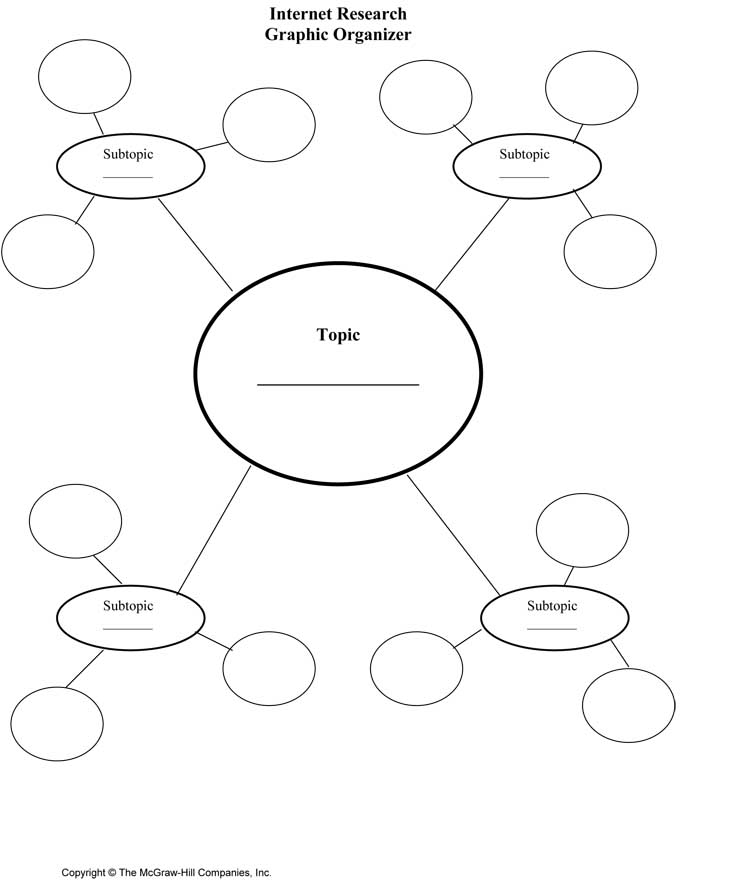
After a few lackluster discussions, Shiela and I decided to try some techniques to encourage students to be a bit more prepared for class and participate more in discussions. One of the activities we incorporated into class was the use of a graphic organizer to help students keep track of what they read and better respond to the material.
The activity asked the students to:
One of the things we struggle with in our learning community is something I think every instructor struggles with during a given semester—ensuring that the students are reading the assigned material.
After a few lackluster discussions, Shiela and I decided to try some techniques to encourage students to be a bit more prepared for class and participate more in discussions. One of the activities we incorporated into class was the use of a graphic organizer to help students keep track of what they read and better respond to the material.
The activity asked the students to:
- Identify the claim—“What is the key argument being made by the author?”
- List some of the data—“What facts does the author present to support his or her claim?”
- Interpret the argument—“What is your overall understanding of the author’s argument and what do you think of the piece as a whole?”
 |
| Type "graphic organizers" into Google Images for more results like this one! |
 |
| Type "graphic organizers" into Google Images for more results like this one! |
 |
| Type "graphic organizers" into Google Images for more results like this one! |
 |
| Type "graphic organizers" into Google Images for more results like this one! |
How do you ensure that your students are doing the required reading?
Let us know in the Comments section below!
Monday, April 15, 2013
Beyond Campus: Teaching at Sherman Hospital
Last semester I was lucky enough to observe one of our nursing faculty members, Mary CaDavid, on the clinical portion of her Nursing 230 course.

The clinical took place at Sherman Hospital in Elgin, a sparkling new ship-like facility just off the highway at Randall Road. Mary had six students working on the Saturday morning that I visited, although I was only there for a few hours and only got to meet and observe three students.
Each of Mary's students was assigned three patients. At the beginning of the morning, I sat down with Mary and one of her students, Toni, to touch base about one of Toni's patients. The two went through each element of the patient's chart with care, checking and double-checking symptoms, medical history, medication, and diagnosis.
They also did preventative problem solving, with Mary asking Toni questions like, "What is the worst possible thing that could happen to your patient today?" Toni answered that this particular patient could suffer a seizure, so Mary walked Toni through making sure that the room inventory included things like pads on the bed rails, a tongue blade, and oxygen.
I asked Mary about this question, which I found so simple but so obviously important, as well as another prompt for her students about their nursing diagnosis. This is what she had to say:
They need to relate this question to the reason for hospitalization. Often the reason the patients were hospitalized is no longer the thing keeping them in the hospital. For instance, a patient came in with a hip issue, but now has pneumonia. From this stance, the students must think of "worst case scenario." I then want to know their nursing diagnosis and nursing priorities. I don't want to hear things like "give them the antibiotic for the pneumonia"--that is a physician order. I want to know how they will intervene, such as increasing fluids, mobilizing the patient, or by incentive spirometry.
During this one-on-one meeting, I was impressed by both women: with Toni, for her methodical questioning, her ability to listen to everything Mary was explaining, and her careful follow up questions; and with Mary, for her patience and calm presence, her on-the-spot scenarios and questions leading her student to think critically and answer comprehensively, and her obvious mastery of the subject matter.
At the end of the day I was honored to observe one of our talented faculty members in action, and I vowed to be even more aware of the practical applications of my content area (English composition). I want my students to consider how they can act and how they can be responsible. Hopefully this will give them a more valuable, relevant, and personal learning experience.
If you're interested in being observed in your non-traditional classroom or your traditional classroom, let me know!

The clinical took place at Sherman Hospital in Elgin, a sparkling new ship-like facility just off the highway at Randall Road. Mary had six students working on the Saturday morning that I visited, although I was only there for a few hours and only got to meet and observe three students.
Each of Mary's students was assigned three patients. At the beginning of the morning, I sat down with Mary and one of her students, Toni, to touch base about one of Toni's patients. The two went through each element of the patient's chart with care, checking and double-checking symptoms, medical history, medication, and diagnosis.
They also did preventative problem solving, with Mary asking Toni questions like, "What is the worst possible thing that could happen to your patient today?" Toni answered that this particular patient could suffer a seizure, so Mary walked Toni through making sure that the room inventory included things like pads on the bed rails, a tongue blade, and oxygen.
I asked Mary about this question, which I found so simple but so obviously important, as well as another prompt for her students about their nursing diagnosis. This is what she had to say:
They need to relate this question to the reason for hospitalization. Often the reason the patients were hospitalized is no longer the thing keeping them in the hospital. For instance, a patient came in with a hip issue, but now has pneumonia. From this stance, the students must think of "worst case scenario." I then want to know their nursing diagnosis and nursing priorities. I don't want to hear things like "give them the antibiotic for the pneumonia"--that is a physician order. I want to know how they will intervene, such as increasing fluids, mobilizing the patient, or by incentive spirometry.
 |
| Sherman Hospital in Elgin--one of the MCC Nursing clinical sites |
At the end of the day I was honored to observe one of our talented faculty members in action, and I vowed to be even more aware of the practical applications of my content area (English composition). I want my students to consider how they can act and how they can be responsible. Hopefully this will give them a more valuable, relevant, and personal learning experience.
If you're interested in being observed in your non-traditional classroom or your traditional classroom, let me know!
Sunday, January 27, 2013
Performance in the Classroom, Learning Communities Style
Last semester, I was lucky enough to observe the final project of Bonnie G. and Lindsay C.'s Speech 151/Spanish 252 Twofer learning community, "Exprésate--With Feeling."
The project, a performance collage called the Bilingual Reader's Theatre, required that students--four female students in one group and four male students in another--explore elements of Hispanic culture and create text based performances around their findings.
The Reader's Theatre project required that the students perform 25% of each performance collage in Spanish. The students had been practicing integrating more and more Spanish into speeches all semester long. One practice session came mid-semester when students performed for a group of three year olds from MCC's own Children's Learning Center: fun and educational!
For this final project, the groups decided to use the gender split of the class to their advantage, so the female student group explored issues of domestic violence, and the male student group explored issues of machismo. The groups named their sources, which included writers as varied as Oscar Hijuelos and John Leguizamo, during the presentation. They used props, choreographed pantomime, and translations that overlapped with original recitations of Spanish. The idea--whether it was the negativity of stereotypes or the empowerment of women--was always clear, regardless of the audience's fluency in the language (specifically this audience member, whose six years of French about seventeen years ago didn't quite prepare her for this...).
What was the most obvious, though, was the success of the Speech and Spanish learning community. The students were able to get up in front of a dozen friends and strangers (some wielding cameras) and perform snippets of the prose, drama, and poetry they had researched and vetted to express (¡exprésate!) the ideas they'd been learning for sixteen weeks. Were they nervous? Absolutely. But they were also terrific.
Now that we've seen two ways our MCC instructors have used performance in their classrooms, how would you use skits or other types of performance in your classroom? Would you ask students to do a relatively quick illustration of a single concept, like with S.V.'s Sociology of Deviance skits? Or would you have them illustrate a semester's worth of content, as Bonnie and Lindsay did? Either way, this kind of interactive group activity can be a terrific classroom tool!
 |
| The male student group |
 |
| The female student group |
The project, a performance collage called the Bilingual Reader's Theatre, required that students--four female students in one group and four male students in another--explore elements of Hispanic culture and create text based performances around their findings.
The Reader's Theatre project required that the students perform 25% of each performance collage in Spanish. The students had been practicing integrating more and more Spanish into speeches all semester long. One practice session came mid-semester when students performed for a group of three year olds from MCC's own Children's Learning Center: fun and educational!
For this final project, the groups decided to use the gender split of the class to their advantage, so the female student group explored issues of domestic violence, and the male student group explored issues of machismo. The groups named their sources, which included writers as varied as Oscar Hijuelos and John Leguizamo, during the presentation. They used props, choreographed pantomime, and translations that overlapped with original recitations of Spanish. The idea--whether it was the negativity of stereotypes or the empowerment of women--was always clear, regardless of the audience's fluency in the language (specifically this audience member, whose six years of French about seventeen years ago didn't quite prepare her for this...).
 |
| Illustrating machismo in Spanish culture |
 |
| Pantomiming poetry lyrics |
 |
| Illustrating domestic violence in Spanish Culture |
What was the most obvious, though, was the success of the Speech and Spanish learning community. The students were able to get up in front of a dozen friends and strangers (some wielding cameras) and perform snippets of the prose, drama, and poetry they had researched and vetted to express (¡exprésate!) the ideas they'd been learning for sixteen weeks. Were they nervous? Absolutely. But they were also terrific.
Now that we've seen two ways our MCC instructors have used performance in their classrooms, how would you use skits or other types of performance in your classroom? Would you ask students to do a relatively quick illustration of a single concept, like with S.V.'s Sociology of Deviance skits? Or would you have them illustrate a semester's worth of content, as Bonnie and Lindsay did? Either way, this kind of interactive group activity can be a terrific classroom tool!
Monday, January 07, 2013
Out of the Box…In the Box: Small Plays in the Classroom
Contributed by S.V., Instructor of Sociology
Scene 1: A concerned Chris converses with Erica on phone wondering why his friend Dennis is avoiding him.
Scene 2: Erica confronts Dennis who has taken on cheerleading.
Scene 3: Dennis reveals to Chris his new role as a cheerleader emphasizing its hypermasculine characteristics such as cheerleading being a tough sport and his ability to hang out with the best-looking girls in school.
This is a play on "Men Who Cheer" from the Sociology of Deviance class this fall. October 31st was the opening night. Students drew on five readings from the textbook. They documented three to five key actions/dialogues for each scene that explains the process of development/management of deviant identity. They demonstrated what puts people in the trajectory of deviance and how they rationalize and manage their deviant status, which they must live with. The students were responsible for the script, role assignment, direction, props, and anything else they decided to include.
During the discussion after the plays, the class said that they had thoroughly enjoyed this assignment. They were able to understand and retain the material in the reading for their plays compared to other assignments including presentations and class discussions. They were able to put themselves in the shoes of the deviants. The only concern expressed was offending their peers in class who may be living with a particular deviance. Other plays included topics of bisexualilty and anorexia, stigma management strategies of homeless kids, and techniques of neutralization used by car thieves.
 |
| "Men Who Cheer" |
 |
| Students Act Out: the stigma of homeless youth |
 |
| S.V., introducing the skits |

Overall this “out of the box” assignment was a very fruitful exercise. Students were also satisfied with the time for preparation which included one entire class period (80 minutes) over a few days. On a personal level, it was a very exciting experience to watch the work of some of the sociologists come to life in my classroom.
How could you use skits to demonstrate key concepts and ideas in your own classroom?
Visit us again next week for another story about MCC instructors using skits/performance in the classroom!
How could you use skits to demonstrate key concepts and ideas in your own classroom?
 |
| The Sociology of Deviance class, Fall 2012 |
Tuesday, December 04, 2012
E-portfolio in Composition I
Contributed by Lisa Crizer, Instructor of English
When creating my syllabus, I always struggle with what to do after Thanksgiving. Students and instructors come back stuffed, unfocused, and usually spend the final two weeks counting down the minutes until winter break. This semester, I decided to try out an e-portfolio.
When creating my syllabus, I always struggle with what to do after Thanksgiving. Students and instructors come back stuffed, unfocused, and usually spend the final two weeks counting down the minutes until winter break. This semester, I decided to try out an e-portfolio.
I’ve assigned portfolios in the past, usually in composition I, and I use them as an opportunity for students to look back on how far they’ve come in one semester. We gather all of our work together in one place and take a look back at the process for each essay: What did the pre-writing look like? The first draft? Now, compare that to the edited final draft you submitted. Can you see the difference?
Normally, I collect the hard copies of the essays, along with any reflection pieces, in a pocket folder. If you stop by my office, you’ll see evidence of this on my overcrowded shelves.
This semester, however, I decided to try something different. Since we’ve been talking about e-portfolios as a possible graduation requirement and since I was able to pull one off when I created my tenure portfolio last year, I figured my students could give it a go.
 |
| Exhibit A |
This semester, however, I decided to try something different. Since we’ve been talking about e-portfolios as a possible graduation requirement and since I was able to pull one off when I created my tenure portfolio last year, I figured my students could give it a go.
We used Google Sites and the students did really well with the assignment. I created a template for them, so that instead of focusing all their energy on designing the e-portfolio, they could spend their time reflecting on their writing. Even with the template, they were still able to make the portfolio look how they wanted it to look, which they really enjoyed. Here’s a link to the template I created for them.
I am very happy with how this went, and I will definitely do it again in the future. My students have an e-portfolio that they can refer back to, and I can begin to reclaim my shelves. Everybody wins!
Sunday, December 02, 2012
Translating Words into Images
On November 26, Deborah Miller Fox, a contributor to the Faculty Focus blog, wrote a post entitled "Get Visual: A Technique for Improving Student Writing."
Miller Fox's post brought up interesting ideas of using images and visual representations to explore and better understand concepts. I believe in the importance of using visuals in my writing classroom, so I found this article--and the "poster" assignment that Miller Fox used in her own classroom--inspiring. So inspiring, actually, that I decided to adapt the assignment (let's be honest: I stole it outright) to use for an in-class activity in my English Composition 152 classroom last week.
Since the beginning of November, my students have been working on a synthesis problem solving essay. They've identified an issue related to violence in schools (one of the texts for the class is Columbine by Dave Cullen), proposed a specific and reasonable solution, and then argued the solution's workability and effectiveness.
The students were turning in their final drafts last Tuesday, so I decided, after reading Miller Fox's article, that I'd have them create a poster to advertise one of the solutions detailed in their papers. I asked them to choose a target audience and explain where they would hang the posters. These are just a few examples of what the students produced.
In addition to creating the posters, the students explained the posters, their intended audiences, and where they'd hang them. They also created MLA style citations for any images they'd found and used from the Internet.
I've decided that this is an assignment I'll start using in the future for this particular paper, and I'll restructure it to give students more time (they only had forty-five minutes of one class period).
For more detail and great ideas for your own classroom, check out the Miller Fox article and other articles from the Faculty Focus blog.
Miller Fox's post brought up interesting ideas of using images and visual representations to explore and better understand concepts. I believe in the importance of using visuals in my writing classroom, so I found this article--and the "poster" assignment that Miller Fox used in her own classroom--inspiring. So inspiring, actually, that I decided to adapt the assignment (let's be honest: I stole it outright) to use for an in-class activity in my English Composition 152 classroom last week.
Since the beginning of November, my students have been working on a synthesis problem solving essay. They've identified an issue related to violence in schools (one of the texts for the class is Columbine by Dave Cullen), proposed a specific and reasonable solution, and then argued the solution's workability and effectiveness.
The students were turning in their final drafts last Tuesday, so I decided, after reading Miller Fox's article, that I'd have them create a poster to advertise one of the solutions detailed in their papers. I asked them to choose a target audience and explain where they would hang the posters. These are just a few examples of what the students produced.
 |
| Student Nick R. created a poster based on a service learning component he completed for his proposal paper |
 |
| Joshua K., a student studying criminal justice at MCC, identified juvenile delinquency as a serious problem to be solved |
 |
| Kiersten C., an active member of MCC's Pride Club, made this poster reflecting solutions to anti-LGBT bullying |
In addition to creating the posters, the students explained the posters, their intended audiences, and where they'd hang them. They also created MLA style citations for any images they'd found and used from the Internet.
I've decided that this is an assignment I'll start using in the future for this particular paper, and I'll restructure it to give students more time (they only had forty-five minutes of one class period).
For more detail and great ideas for your own classroom, check out the Miller Fox article and other articles from the Faculty Focus blog.
Monday, November 12, 2012
Reaching the Modern Student
In preparation for my workshop this Friday, Reaching Modern Students, I did a quick and very informal survey of my two English Composition 152 classes. I asked my students to define a "modern" student and identify what made them "modern" students.
I got a variety of answers, and some were more useful than others (one student claimed to be a "laid back learner," which is a learning style I'm not too familiar with...). But I did get some insightful feedback.
Many of my students like to be "hands on" when learning concepts. They prefer to get an overview and explanation of a concept, an example of that concept in action, and then they like to take action themselves by using that concept on their own. For my writing classes, this means getting the overview and examples of a particular concept (e.g. using appeals [logos, ethos, pathos] in argumentative and persuasive writing) before applying it themselves during an in-class activity or homework essay. In other disciplines this might mean lab work, discussion, or some other way of the students beginning to take ownership over the course concepts.
My students also seem to consider themselves to be visual learners, and this is a learning style that may be cultivated more and more by the on-screen way young people are receiving information. They want PowerPoint or Prezi presentations (though one student warned that "no matter what, if you don't have good 'stage presence', slides won't make up for it." yikes.) and video clips, and pictures and stories or narratives that reinforce concepts. And although they all noted their heavy use of technology and social media, not one student mentioned an interest in using an e-textbook.
For more about what makes a modern student and how we can reach our students more effectively, register for the workshop, which will take place from 1 - 2 p.m. on Friday, November 16 (use the Professional Development auto-registration system).
Hope to see you then!
I got a variety of answers, and some were more useful than others (one student claimed to be a "laid back learner," which is a learning style I'm not too familiar with...). But I did get some insightful feedback.
 |
| The "laid-back" learning style at play |
Many of my students like to be "hands on" when learning concepts. They prefer to get an overview and explanation of a concept, an example of that concept in action, and then they like to take action themselves by using that concept on their own. For my writing classes, this means getting the overview and examples of a particular concept (e.g. using appeals [logos, ethos, pathos] in argumentative and persuasive writing) before applying it themselves during an in-class activity or homework essay. In other disciplines this might mean lab work, discussion, or some other way of the students beginning to take ownership over the course concepts.
My students also seem to consider themselves to be visual learners, and this is a learning style that may be cultivated more and more by the on-screen way young people are receiving information. They want PowerPoint or Prezi presentations (though one student warned that "no matter what, if you don't have good 'stage presence', slides won't make up for it." yikes.) and video clips, and pictures and stories or narratives that reinforce concepts. And although they all noted their heavy use of technology and social media, not one student mentioned an interest in using an e-textbook.
For more about what makes a modern student and how we can reach our students more effectively, register for the workshop, which will take place from 1 - 2 p.m. on Friday, November 16 (use the Professional Development auto-registration system).
Hope to see you then!
Sunday, October 14, 2012
Math Made Relevant
Contributed by Kate Kramer, Instructor of Earth Science & Geology
We’ve all heard it… “I don’t do math” or “math is scary.” But the truth is everyone uses some form of math everyday, and math certainly isn’t scary (zombies are scary). But what can instructors do to help dissolve students' math anxiety? I’ve been working with a program called The Math You Need, When You Need It (TMYN) to help assist students with lacking math skills.
The basic premise of TMYN are web-based modules that help students succeed with mathematics in introductory geoscience classes (don’t teach geoscience? Good news… we are currently working on modules for other science courses, too). Recent studies show that these tools help "level the playing field" by supporting students in learning, reviewing mathematical skills, and reducing math anxiety in geoscience courses.
TMYN provides a direct link between quantitative math skills and the geoscience classroom. I use the modules to support many topics in the laboratory and lecture portions of Physical Geology. We currently apply modules about converting units, rearranging equations, calculating density, understanding graphs, and interpreting slope and topographic lines.
Students have commented on how prepared the modules have made them in the classroom, and the overlapping usefulness of the modules in other courses, such as, “the website is a good review of material I haven’t used in a while” and “I get math now.” My implementation of TMYN has been one of my most successful teaching strategies, as it supports my students with lecture and laboratory quantitative skills.

Thursday, September 27, 2012
One Instructor's Method for Class Participation
Contributed by Craig Derscheid, Instructor of Speech and Journalism/Film
I feel this is a very important part of the classroom environment. I tell my students that this is a way to let me know what they are thinking about and maybe just to ask questions. But what is the right amount of participation?
Sometimes you have students who love to dominate the discussion. I tell my students that after they have made three comments each, they can take a break and let the other students give me their insight through discussion. But what happens sometimes is that you may have complete silence.
At that point, I will call on specific students to get involved in the discussion.
In my film classes, students are not necessarily giving right or wrong answers but using the terms we talk about in class to analyze the film. This is a little easier than if they have to give a right or wrong answer. If I can't get the students to speak up at all, I remind them as I stated at the beginning of the semester I need to have them participate in discussions. If we can't get a good discussion going, I will have them write a one page type written paper about what we should be discussing and give them 10 points for writing an accurate analysis of the film just viewed. This works sometimes but not always to help them to participate.
These are just a few thoughts on getting students to participate in class discussion, which, for my teaching style, is very important. Do you have problems with participation? What are your helpful tips for us to learn from?
Monday, April 18, 2011
Identifying Learning: A Discussion Starter
Below are some discussion-leading ideas and questions from contributor Dawn Wagner, Instructor of International Business and Marketing at MCC. Read them over and then reply with your best attention grabber or student motivator. Anyone posting their comments between today and the end of day on Thursday, April 21 will have their entry published and will be entered into a drawing to receive a gift certificate to our very own MCC cafeteria! Either enter your comment below or email it to Laura Power.
"Does every blank stare mean that our students aren't paying attention, or are they really doing what we want: listening, learning, and synthesizing? And what can we tell by the way they text, take notes, talk to the person next to them, and eat Doritos?
How can we teach, model, apply, and reflect every day in both our online as well as in our traditional classrooms? What are you doing that works?"
Monday, April 11, 2011
Texting in the Classroom
By contributor Laurie Riggin, Instructor of Art at MCC
Is frequent text messaging in class harmful to students’ educations? In this digital age of technology, constant information, and multi-tasking, students can engage in constant communication with others but this practice may actually encourage scattered concentration, distraction, and disengagement with course material. Many students have a difficult time withdrawing from technology--the phone becomes more interesting than the real world. Recent studies have shown that constant texting leads to anxiety, distraction in school, falling grades, and sleep deprivation. As an educator, I worry that students are not developing the social skills they need to succeed in school and beyond the classroom.
I make it clear to students at the beginning of each semester that I have zero tolerance for texting in my classroom. If they are caught using their phone, they will be asked to leave and will receive a “0” for that day’s activities. Students also sign a “promise statement” that they will turn off and refrain from using their phone during scheduled class time. Throughout the semester, I also provide reflective periods as a way to create a level of relaxation, awareness, and concentration. In the spring and fall, I have my students spend quiet time near the pond or in MCC's zen garden. For several minutes, they close their eyes and concentrate on hearing the “smallest” sound: frogs croaking, a distant bird chirping, the wind. This exercise encourages contemplation on the immediate world. It also inspires the imagination, as well as creative and compelling thinking. As a result, students are more focused on course material and they engage with their classmates in a more direct way.
Subscribe to:
Posts (Atom)