Showing posts with label Faculty Development Reading List. Show all posts

Tuesday, July 28, 2015

Easing Back Onto Campus

Clearly, I've taken the summer "off" from campus (since the last post published here was in April...). I've spent the last ten weeks on my own projects, some of which prepared me for class, some of which were just plain fun. But now, looking at my calendar, I realize that I've got to get back on campus and do some work.

But it's hard, right? I think about my Outlook inbox and I want to shrivel into a raisin and drop under the couch.

Image Credit

So I've decided to ease back into some of the administrative tasks I've got to get done before I can get down to the fun stuff of teaching. We've got two weeks until classes begin (holy cow). Here's how to start:

Start checking the Employ-E-Newsletter
If you're like me, you might have been auto-deleting these daily e-newsletters through June and most of July. But  now is the time to give those a glance for the information you'll need before the new school year, information about MCC facilities, new procedures, and new opportunities.

Open Your Outlook Inbox
Notice that I haven't told you to "read" any of your email -- right now, I just want you to open it. Then walk away and get a cup of coffee.

Delete Your Unnecessary Emails
Okay, now, look over the emails you've gotten since June 1. ("look over" -- don't "read") Delete anything that you don't need: emails from textbook buyers, from textbook publishers, from that weird company you used to order custom pencils for the student group you advise. Good job! Now, get a donut to go with your coffee.

Prioritize Your Remaining Emails
Some of the emails left in your inbox are important, so put them in an order to read and respond. You might put them into folders, you might even decide to answer a few that look time-sensitive. But don't check them all. Julie Morgenstern, time management professional and author of Never Check Email in the Morning, likens an email-reading-and-responding streak, especially first thing in the day, to not only a time-waster, but to an addiction. Don't get addicted to answering email; get addicted to something good, like donuts. Now, go get a second donut and a refill on your coffee.
(hear from Morgenstern talking about work-life balance on WBEZ's Morning Shift program)

Start Folders for Your New Classes
I have a file folder for each class I teach each semester, and in each folder are three sub-folders marked Handouts, To-Read, and Hand-Back. I carry these folders to classes with me, and they help me feel organized, even though most of my assignments are given and submitted via Canvas. You might have something similar, or you might have something different -- an electronic system, a notebook, a series of color-coded kazoos. Whatever it is, start to get it together.

Photo Credit: Milestone Music Therapy


Finish Your Syllabus
You might have started updating your Fall 2015 syllabus in a fit of productivity on May 19. And then it sat there, open on your computer, for the next eight weeks. Hey, me too! Well, it's time to get it done, so open those documents and get to work. Don't forget that Labor Day is September 7, Professional Development Day is October 13, and Thanksgiving is November 26.

Get Excited for Fall Faculty Development Day
Our Fall 2015 FD Day is Thursday, August 13, and it's going to be terrific. So look for the invitation letter (please read it!) and program in your Outlook inbox this week.

Okay, now get started! Don't do it all at once: give yourself a bit of time each day for the rest of this week, and you'll start to feel ready. And don't forget the donuts!

Wednesday, October 01, 2014

Getting Things Done at MCC

October is the month to Get Things Done!

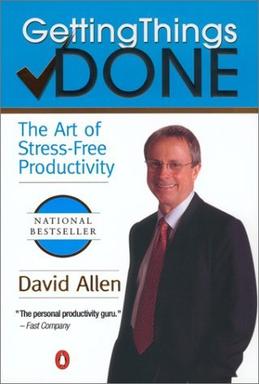
We now have six copies of Getting Things Done by national bestselling author, David Allen down in Professional Development (A210) for you to borrow and peruse. Our own Timothy Linehan has been presenting a workshop based an Allen's theories, and he will be re-running this popular GTD session on October 22.


Getting Things Done (or GTD) is a time-management protocol. Although it might sound boring, the method has attracted such a passionate following that some have (half-jokingly) accused GTD of reaching a cult-like status.
Widely-adopted in fields such as information technology and business management, the GTD craze has not fully reached academic circles. This workshop seeks to remedy that problem. Overflowing inbox? Cluttered workspace? Forgotten deadlines? Stop worrying and start Getting Things Done.

Timothy's workshop on October 22 is appropriate both for newcomers and previous GTD workshop participants in need of a refresher. And as someone who is a convert, I highly recommend this session.

Register through the Professional Development auto-registration, now!

Thursday, August 22, 2013

Making Groups Work in the Classroom

Last semester I participated in the Undergraduate Research Scholar Program here at the College. The student I worked with was interested in researching the impact of positive teacher-student relationships in the classroom on student success, and one of her information gathering methods was to observe a number of faculty members at MCC.

One technique she noted during her observations was the teaching style each instructor used: lecture, lab, small group work, discussion, or something altogether different. And although she drew a lot of interesting conclusions based on her observations, the one I found most interesting was this:

Students were more interested in group work if there was no grade, or if the grade was low-stakes.

Now, I've always worked under the assumption--based on my own experiences--that students care less when there's nothing "at stake" (i.e. no grade). This has, in particular, caused me to stop grading participation (a sticky wicket to try to grade anyway) and to no longer "grade" attendance, and to use in-class activities instead. But this group grade conclusion was really a revelation!

After talking with my student, Shaz, and Anne Humphrey and Elaine Whalen, I came up with some ideas to make group work work for the classroom:

Use group work as a method of practicing what they'll need to do on their own for an independent assignment
The second paper my English Composition 2 students write is an argumentative problem solving paper. Right after I hand out the assignment and explain the principles of problem solving, I have the students practice problem solving during an in-class activity. By doing this, the students can try out the new concept they've just learned in a low-stakes group activity (currently, it's weighted at 3% of their overall grade). And, if they pay attention during the group work, they can use the exercise as a template for the paper they'll spend the following month writing.

Let students "fire" members of their group
In Elaine Whalen's group research project, students can "fire" a student group member who is not pulling her weight. The group must give the student in question a verbal warning, and then a written warning, and the instructor must know about all of it. The student who has been let go from the group will either get a zero on the project or she can ask another group to take her in and hopefully redeem herself. Elaine has found that students who get "fired" work doubly hard in their adopted group.
You're fired.
Use the drafting process for student accountability
If you're giving a group grade on a project but want to make sure that each student has contributed their fair share and has mastered all of the content--not just a small portion of it--ask each student to submit a "rough" final project with all elements included. This allows you to track their participation, and it allows the full group to then decide which elements from each individual student's work should be included (they vet the pieces to create a stronger "whole" piece).

Assign a student to be the designated a-hole
The book You Are Not So Smart by David McRaney (yes, the title is awful, but it's an interesting book) has a chapter on "Group Think." McRaney writes about this phenomenon. The misconception, McRaney writes, is that "problems are easier to solve when a group of people get together to discuss solutions." But the actuality is that "desire to reach consensus and avoid confrontation hinders progress."


Based on that idea and the rest of McRaney's chapter, we can suggest a few things for successful small group problem solving:
  • Don't tell your students your opinion as their instructor--they will think that, because you're the "boss," this opinion is the only one, the "right" one.
  • Allow students in groups to break into pairs--this will allow dissent to manifest, and that dissent might be very good for the problem solving or discussion at hand. Left in the larger group, however, students might simply wait for consensus to be reached and say nothing about their own contrary ideas.
  • Assign an a-hole to the group--McRaney states, "for any group to work, every team needs at least one asshole, who doesn't give a shit if he or she gets fired, or exiled, or excommunicated." So, make sure that there is that voice of dissent by giving one student in each small group the role of devil's advocate. Not only will this produce some interesting results, but the students will get a kick out of it!
What have you done in class to make group work work for you? Let us know in the comments section below!

Thursday, November 01, 2012

Perspective

The other week during Professional Development Day, our keynote speaker, Doug Dvorak, talked about keeping our problems in perspective. He called our issues "high class problems," and while I was a little uncomfortable with the term since I do not, in any way, shape, or form, consider myself to be "high" class (as my predilections for zombies and Kraft Macaroni & Cheese illustrate), I had my own moment of perspective the other day.

I was meeting my students for one-on-one conferences to talk about their essay drafts. One of my student's essays was the story of why he has decided to become a police officer, and one of his reasons was that he and his mother's house had recently been burglarized by their neighbor. I asked him what had been stolen and he said they'd taken $20. I replied, "Well, $20 isn't a huge amount of money, but any kind of a theft feels like a big violation."

And this is what he said: "Actually, twenty dollars is a lot of money for me and my mom. She's not working, so that was a big deal to us."

And I wanted to kick myself.

I live in a two-income household. My husband and I have one car, no children, and not even a pet since our dog passed away last March. I have a good health insurance plan and never have to worry about putting food on my table. And last month I spent about $20 on lip gloss alone (that's not an exaggeration).

So even though I try to understand that our students struggle to pay for not only their tuition but for their textbooks, flash drives, notebooks, folders, and pens as well, it's sometimes hard to see beyond my own relatively comfortable situation.

Our students struggle, sometimes, to pay their rent and their car insurance, their utility and credit card bills, and in the most unfortunate situations they cannot overcome those struggles, and they wind up homeless. According to the U.S. Department of Housing and Urban Development's 2009 Annual Homeless Assessment Report to Congress, 22.3% of all sheltered homeless were between the ages of 18 and 30. Those could be our students. And even if our students don't have to suffer this fate, some of them still live in neighborhoods where they could be robbed by the person living next door.

After having this foot-in-mouth experience, I know that I must be more mindful of what I say, what I think, and how I approach my students and their lives.

Have you ever had a "perspective" moment with a student?

For other reading, see the June 2012 report from the National Center for Homeless Education and the Huffington Post article that decodes some of it.

Wednesday, September 19, 2012

Teaching with The Mindset List

A couple of weeks ago in A210 we listened in on a free Mediasite webinar about The Mindset List, a "globally reported and utilized guide to the intelligent if unprepared adolescent consciousness."

The Mindset List, which Beloit College has been updating for over a decade, is now a book, and the authors, Tom McBride and Ron Nief, led us through an hour long discussion of putting the list to use in the modern classroom.


There were a number of eye-opening statements from McBride & Nief, including the following:
  • It's not that the students don't know, but that they haven't had the same experiences
  • The students assume that the technology is there and possible, because it always has been!
  • Time magazine published its issue "Welcome to Cyberspace" the year most of our students were born--for them, it has always been a reality
  • Dealing with technology in the classroom and teaching responsible use of technology in higher education is a recursive process
  • Students need to understand that there's a difference between instant information and instant right answers
I got some great ideas for approaching students, and for using new strategies in the classroom. Some of the ideas grew from things I already do--like using design elements in my presentations (photos, media) instead of too much text. But there were a lot of things I plan to try this semester and semesters to come, including:
  • Defining what "being prepared" means in my classroom
  • Flipping my classroom so that I use lecture capture to record lectures for students to watch as homework and use my face-to-face classroom time for "lab" work, which in English usually means drafting, consulting/peer review, and revision time
I also plan to continue to mine current technology and social media trends for things I can apply to my classroom for the students' benefit.

Overall, the webinar was a success, but it made me curious to pick your brains and ask: What do you do to reach your modern students, and what do you think you might start doing differently? 

Monday, August 27, 2012

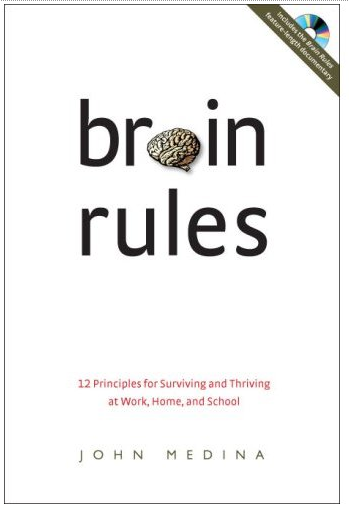
Brain Rules

Over the summer I cultivated my fascination with the human brain by reading a book by John Medina, a developmental molecular biologist and professor in Seattle, Washington. The book, called Brain Rules: 12 Principles for Surviving and Thriving at Work, Home, and School, was not only an interesting and enjoyable read, but Medina also gave me some ideas from his own classroom for presenting lessons.

A big part of Medina's book centers around human memory. He writes that people's attention spans typically start to wane after 10 minutes. Because of this, as well as because of the principle that people tend to remember things to which they are emotionally connected, Medina creates his lessons in 10-minute "modules." At the end of each module he not only repeats the main idea he has just covered (repetition is the key to remembering!), but he will also grab his students' attention with a personal anecdote or emotional bit of information. By doing this he can recapture his students' focus for the next 10 minute module and reinforce what they have just learned.

In addition to talking about memory, Medina expresses frustration with the physical layout of the typical classroom. He believes that tables and desks facing the all-too-familiar podium is not the best structure for student learning. Because he brought it up, I got to thinking about how I would design my ideal classroom. Would it be small four-seat tables scattered around the room with whiteboard on all four walls? Or would it be a horseshoe shape of chairs so students would actually look at one another when addressing discussion questions? I couldn't come to a firm resolution, so I'm curious to hear from you: What would your ideal classroom look like?

If you're interested to know what Medina says about
  • keeping a healthy brain
  • how we remember
  • why multi-tasking is impossible, and
  • the "Jennifer Aniston Neuron" (yep, you read that correctly!)
then check out his book. And if you listen to the audiobook, be aware that Medina narrates it himself and his enthusiasm about the human brain is big and absolutely contagious!


(For a more scientifically minded approach to the human brain and reading, check out Maryanne Wolf's Proust and the Squid: The Story and Science of the Reading Brain.)